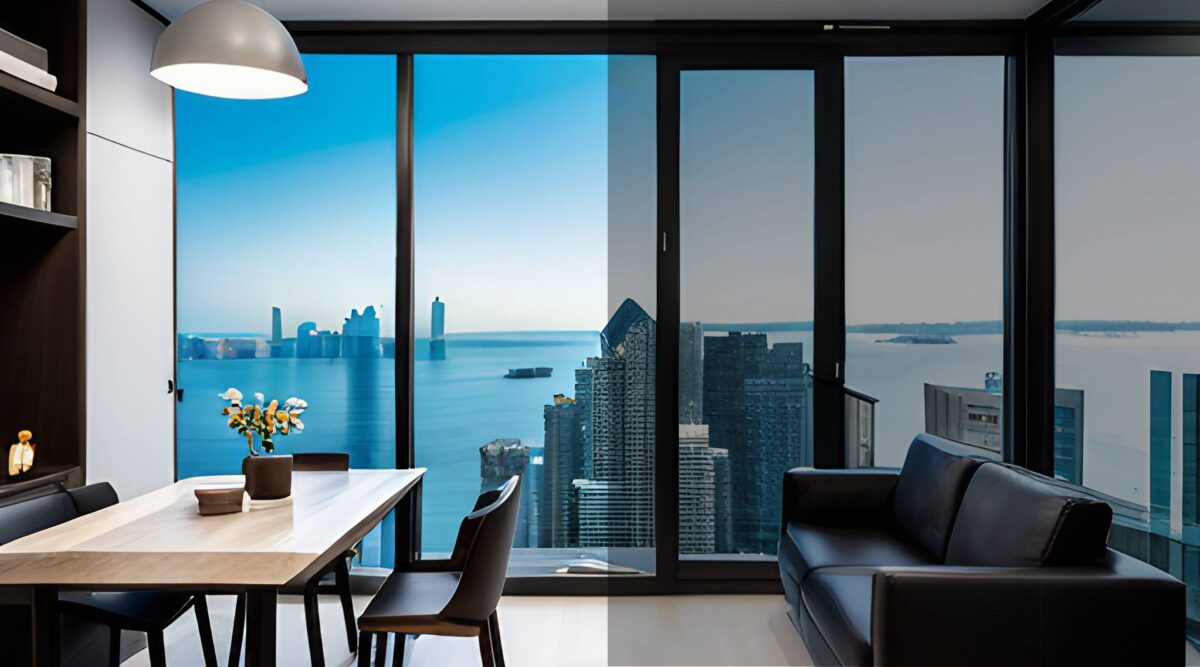
Window films are one of the most searched home upgrades in Toronto for a reason. Homeowners across the GTA look for window films when rooms get too hot, privacy feels gone, glare ruins screens, or energy bills keep climbing.
If you search “window films Toronto” or “window films near me,” you’ll notice the same problems coming up again and again. Summer heat pouring through glass. Condos that feel exposed at night. Hardwood floors fading near windows. Window films exist to fix these issues without replacing your windows.
Window films are thin layers applied directly to existing glass. They change how the glass reacts to heat, light, and visibility. They work in houses, condos, townhomes, and even older Toronto homes with large window openings.
Unlike curtains or blinds, window films work all day without being opened or closed. Once installed, they stay in place and quietly do their job.
How Window Films Work on Residential Windows
Standard glass does very little to block heat or UV rays. That’s why rooms with large windows heat up fast, even in spring.
Window films add multiple layers to the glass. Each layer has a job. Some reflect solar heat. Some absorb it. Others block UV rays or limit visibility from outside.
- Solar layers reduce heat and glare
- UV layers protect floors and furniture
- Privacy layers change outside visibility
- Safety layers help hold broken glass together
Once window films are applied, the glass behaves differently. Sunlight still enters, but the harsh parts get filtered out.
A condo owner near CityPlace recently contacted us after their west-facing unit hit uncomfortable temps every afternoon. After installing solar window films, indoor temps dropped enough that their AC stopped running non stop. No new windows. No drywall mess.
Why Window Films Matter in Toronto’s Climate
Toronto weather is not gentle on windows. Summers bring strong sun and humidity. Winters bring cold glass and heat loss.
In July, south- and west-facing windows let heat in fast. In January, those same windows feel cold even when the thermostat says the house is warm.
Window films help balance these swings. Solar films reduce heat entering during summer. Low-emissivity films help reduce heat loss during winter.
This matters more in the GTA than many homeowners think. High-rise condos, townhouses close together, and modern homes with large glass panels all feel these effects stronger.
A family in Vaughan recently added window films to their upstairs bedrooms after summer sleep became impossible. The result wasn’t perfect silence or instant cooling, but the rooms stopped feeling like ovens by bedtime.
Different Types of Window Films for Homes
Not all window films do the same thing. Choosing the wrong type leads to disappointment. Choosing the right one fixes the problem.
Solar Window Films
These focus on heat control and glare reduction. Some are lightly tinted. Others are nearly clear.
Solar window films work well in living rooms, home offices, and condos with floor-to-ceiling glass.
UV Blocking Window Films
These films block UV rays while keeping the window clear. They help slow fading on floors, furniture, and artwork.
Older Toronto homes with original hardwood often choose this type.
Privacy Window Films
Privacy films limit how much people can see inside during the day. They are common on front-facing windows and bathrooms.
Privacy works best when outside light is stronger than inside light. At night, interior lighting choices still matter.
Decorative and Frosted Window Films
These films add privacy while keeping spaces bright. They are often used in bathrooms, stairwells, and entry doors.
Safety and Security Window Films
Security window films strengthen glass and help keep shards together when broken. They slow forced entry and reduce injury risk.
Ground-floor windows and sliding doors often benefit most.
Window Films vs Window Replacement
Many homeowners compare window films with replacing windows. Replacement has its place, but it is expensive and disruptive.
Window films cost less, install faster, and solve specific problems without removing frames or glass.
A homeowner in Mississauga recently received a replacement quote near $38,000. Window films solved their heat and glare issues for a fraction of that.
Window films do not fix rotted frames or broken seals. But for heat, glare, privacy, and UV problems, they often make sense first.
Common Questions People Ask About Window Films
Do window films damage windows? No, when installed properly using films matched to the glass type.
Do window films make rooms dark? Not always. Many films block heat while keeping rooms bright.
Can window films be removed? Yes. Window films are removable.
Are window films legal in Toronto? Yes. There are no residential restrictions.
Choosing a Window Film Installer in the GTA
Film quality matters, but installation matters more.
Bad installs cause bubbles, peeling, and visible edges. Good installs look clean and last.
A proper window film installer checks glass type, window direction, room use, and seasonal sun angles.
Local experience matters. A downtown condo behaves differently than a detached home in Brampton or Oakville.
Why Homeowners Keep Choosing Window Films
Window films fix real problems without turning homes into construction zones.
They reduce heat, glare, fading, and privacy stress. They work quietly. They last for years.
That’s why window films keep growing in popularity across Toronto and the GTA.
Thinking About Window Films for Your Home?
If your home feels too hot, too exposed, or uncomfortable near windows, window films are worth looking into.
Not every film fits every window. That’s why advice matters as much as the product.
Learn more about window films and residential installation options with Tintly Window Films. A quick conversation often saves months of frustration.